
This XenForo 2.x addon adds additional definitions for bot detection in sessions.
This allows more accurate indication of the number of users vs robots online at any given time.
New bot definitions are pulled automatically via API and potential new bots detected are sent back to the addon author for analysis for inclusion in the bot definitions.
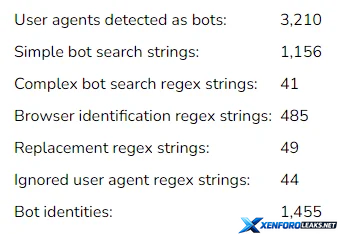
As of October 2023, the addon can detect over 1,400 different bots and the API database now contains more than 3,200 user agent strings that have been identified as bots.
Statistics from the KnownBots API server management system, custom built to track and identify bots and serve the updates API:
Requirements
This addon requires PHP 7.0.0 or higher and works on XenForo 2.3+
Usage
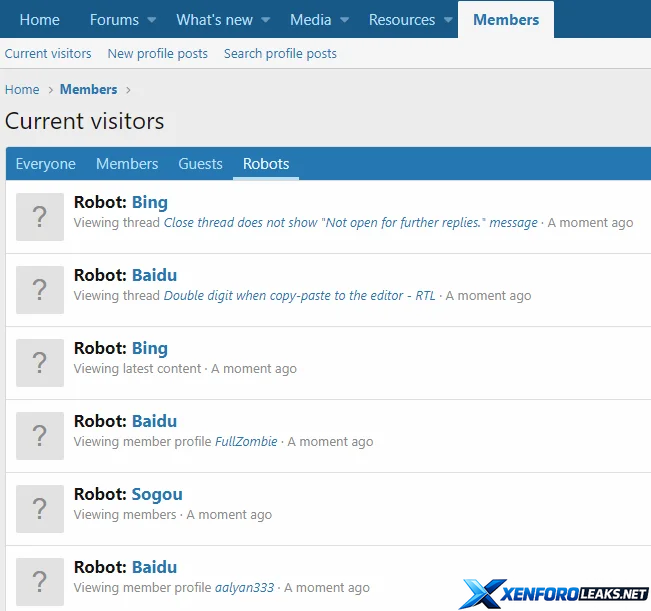
When you look at Current Visitors, you'll see additional robots identified - also look at the "Robots" list on that page
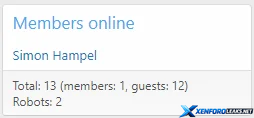
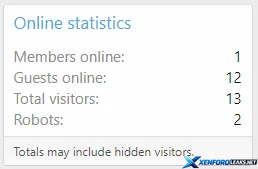
We also add the current robot count to the Members online widget and the Online statistics widget (from the current visitor page). This can be disabled via the options.
There is a tool in the admin area for displaying a complete list of currently known bots:
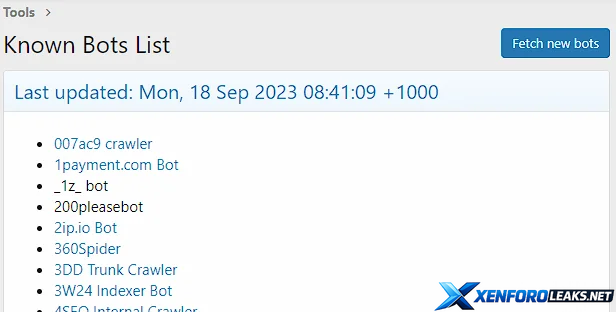
... and another tool which lets you test a user agent string to see if it would be detected as a bot or not:
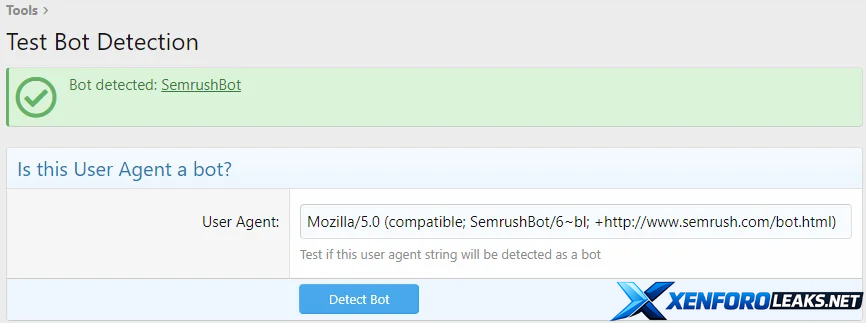
... and a third tool which shows a list of the last 100 bots detected, along with any unidentified user agents waiting to be sent back for analysis.
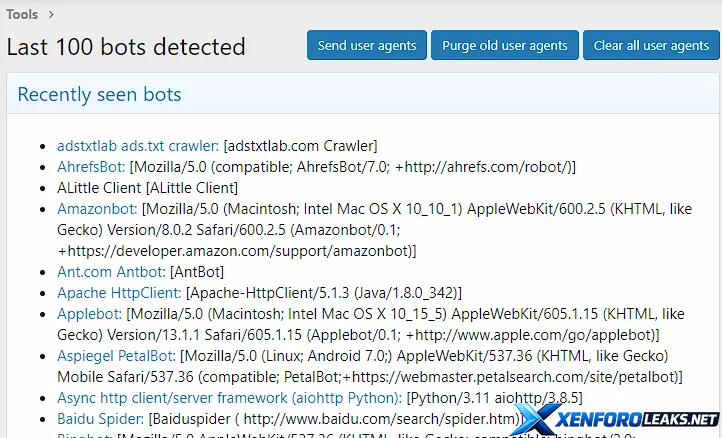
New in Version 6
Verion 6 is a complete rewrite from previous versions - with bot detection now up to 15x faster than the previous method. Bot detection is also more sophisticated - with a secondary regex-based detection system to help identify complex bot strings that can't be matched using the simple text string matches used by default.
If no bots are detected, the addon will check the user agent against a list of valid browser regex strings - and if not considered to be a valid user-driven browser, it will store the information in the database temporarily before sending the information back to the addon author via email for further analysis.
Previously, the system only sent back user agents which matched key words: bot|crawl|spider - this new detection method is significantly more comprehensive and allows much greater accuracy for detecting new bots that may not identify themselves using the traditional keywords.
Also new in this version is the deprecation of the email sending facility - new user agents are now sent directly via API, with authentication facilitated by the XenForo license validation system and very easy to configure.
Options
Show robot statistics
Enable to show robot statistics in the sidebar widgets
Fetch new bots
Enable to automatically fetch new bot identifiers from the KnownBots API maintained by the addon author. If you disable this option, you must set up your own system to update the known bots defnitions - see the Command Line Interface section for options to assist here
Store user agents in database and purge after
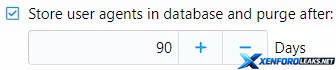
Enable to store unknown and bot user agents in the database for further analysis. This should be used in conjunction with the "Send user agents via API" and "Email user agents" option to send unknown user agents back to the KnownBots management system for further analysis and identification of new bots. You may also manually send user agent information to the addon author via the addon discussion thread - use the "List detected bots" tool to show unknown user agents.
With this option enabled, you may also choose how long to retain user agent records before they are automatically purged from the database. This uses a "last seen" mechanism to maintain the list of recently seen bots - only bots not recently seen will be purged. For busy sites, consider lowering this value from the default 90 days, to reduce the size of data stored. Set days to zero to never purge user agent data (not recommended).
Send user agents via API
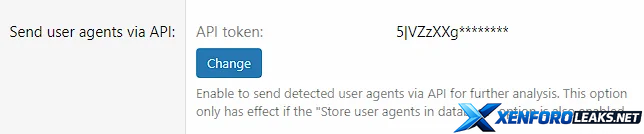
New in version 6, enabling this option will send unidentified user agents back to the addon author for further analysis and identification of new bots.
To configure the API, enter the License validation token for your site, found in the XenForo customer interrface. The validation token will be sent to the XenForo customer validation API and if valid, an KnownBots API token will be generated and returned back for subsequent authentication purposes.
With a validated license, the authentication process is automatic. API tokens are regenerated every 28 days and are re-authenticated automatically. Customer details are automatically purged from the KnownBots database after 30 days of inactivity (see privacy details below). Regenerating your license validation token will automatically cause API revalidation to fail and customer details to be purged - unless you re-configure the addon options with the new license validation token.
Email user agents
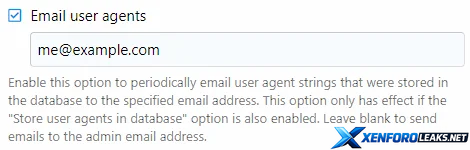
Note: emailing user agents to the addon author is now deprecated
The email interface will remain operational for a short period to allow time for addon users to upgrade to version 6, but will soon be deactivated at which point emails sent to the knownbots@hampel.io address will start bouncing back as undeliverable.
This option will remain available to allow users to periodically send emails to an address of their choosing for monitoring newly detected user agents. This option only has effect if the "Store user agents in database" option is also enabled. You may specify multiple email addresses separated by commas.
Logging
Install the Monolog Logging Service addon to log information about emails sent and API queries made.
Command Line Interface
There are CLI tools provided which may be helpful for certain use-cases.
Fetch Bots
Fetch new bots via the API. Use this to run your own cron - does the same task that the supplied XenForo Cron job does.
Use the
If using this command via your own cron - be sure to disable the supplied XenForo Cron job titled "Known Bots: Fetch New Bots from API".
Load Bots
Load bots data from the knownbots.json file already on the filesystem.
The addon looks for the file
Reprocess User Agents
Cycle through user agents stored in the database and update the definitions based on the latest bot detection data.
By default, only "unknown" user agents are reprocessed. Use the
Test Bots
Test the supplied user agent string and identify whether it is detected as a bot.
Don't forget to quote user agent strings that contain spaces. For example:
Use the
Check API Token
(New in v6) Test if the KnownBots API Token is valid.
Use the
Send Agents
(New in v6) Send newly detected user agents to the KnownBots API. Does the same thing the cron job does - but can be run externally via a system cron or manually for testing purposes.
Parse Log File
Reads web server log file information and lists all detected bots.
Use the
Command will also accept data from stdin if you specify a hyphen as the file name.
Note that this tool assumes you are using standard "Apache" log file format, which is used by most web servers.
Usage examples:
List all user agents. Invalid (or no) data will be returned if you are not using standard Apache log file format.
List bots:
Examples of reading data from stdin:
This allows more accurate indication of the number of users vs robots online at any given time.
New bot definitions are pulled automatically via API and potential new bots detected are sent back to the addon author for analysis for inclusion in the bot definitions.
As of October 2023, the addon can detect over 1,400 different bots and the API database now contains more than 3,200 user agent strings that have been identified as bots.
Statistics from the KnownBots API server management system, custom built to track and identify bots and serve the updates API:
Requirements
This addon requires PHP 7.0.0 or higher and works on XenForo 2.3+
Usage
When you look at Current Visitors, you'll see additional robots identified - also look at the "Robots" list on that page
http://www.example.com/community/online/?type=robotWe also add the current robot count to the Members online widget and the Online statistics widget (from the current visitor page). This can be disabled via the options.
There is a tool in the admin area for displaying a complete list of currently known bots:
... and another tool which lets you test a user agent string to see if it would be detected as a bot or not:
... and a third tool which shows a list of the last 100 bots detected, along with any unidentified user agents waiting to be sent back for analysis.
New in Version 6
Verion 6 is a complete rewrite from previous versions - with bot detection now up to 15x faster than the previous method. Bot detection is also more sophisticated - with a secondary regex-based detection system to help identify complex bot strings that can't be matched using the simple text string matches used by default.
If no bots are detected, the addon will check the user agent against a list of valid browser regex strings - and if not considered to be a valid user-driven browser, it will store the information in the database temporarily before sending the information back to the addon author via email for further analysis.
Previously, the system only sent back user agents which matched key words: bot|crawl|spider - this new detection method is significantly more comprehensive and allows much greater accuracy for detecting new bots that may not identify themselves using the traditional keywords.
Also new in this version is the deprecation of the email sending facility - new user agents are now sent directly via API, with authentication facilitated by the XenForo license validation system and very easy to configure.
Options
Show robot statistics
Enable to show robot statistics in the sidebar widgets
Fetch new bots
Enable to automatically fetch new bot identifiers from the KnownBots API maintained by the addon author. If you disable this option, you must set up your own system to update the known bots defnitions - see the Command Line Interface section for options to assist here
Store user agents in database and purge after
Enable to store unknown and bot user agents in the database for further analysis. This should be used in conjunction with the "Send user agents via API" and "Email user agents" option to send unknown user agents back to the KnownBots management system for further analysis and identification of new bots. You may also manually send user agent information to the addon author via the addon discussion thread - use the "List detected bots" tool to show unknown user agents.
With this option enabled, you may also choose how long to retain user agent records before they are automatically purged from the database. This uses a "last seen" mechanism to maintain the list of recently seen bots - only bots not recently seen will be purged. For busy sites, consider lowering this value from the default 90 days, to reduce the size of data stored. Set days to zero to never purge user agent data (not recommended).
Send user agents via API
New in version 6, enabling this option will send unidentified user agents back to the addon author for further analysis and identification of new bots.
To configure the API, enter the License validation token for your site, found in the XenForo customer interrface. The validation token will be sent to the XenForo customer validation API and if valid, an KnownBots API token will be generated and returned back for subsequent authentication purposes.
With a validated license, the authentication process is automatic. API tokens are regenerated every 28 days and are re-authenticated automatically. Customer details are automatically purged from the KnownBots database after 30 days of inactivity (see privacy details below). Regenerating your license validation token will automatically cause API revalidation to fail and customer details to be purged - unless you re-configure the addon options with the new license validation token.
Email user agents
Note: emailing user agents to the addon author is now deprecated
The email interface will remain operational for a short period to allow time for addon users to upgrade to version 6, but will soon be deactivated at which point emails sent to the knownbots@hampel.io address will start bouncing back as undeliverable.
This option will remain available to allow users to periodically send emails to an address of their choosing for monitoring newly detected user agents. This option only has effect if the "Store user agents in database" option is also enabled. You may specify multiple email addresses separated by commas.
Logging
Install the Monolog Logging Service addon to log information about emails sent and API queries made.
Command Line Interface
There are CLI tools provided which may be helpful for certain use-cases.
Fetch Bots
Fetch new bots via the API. Use this to run your own cron - does the same task that the supplied XenForo Cron job does.
Bash:
$ php cmd.php known-bots:fetchUse the
-f option to force updates, bypassing the "last updated" flag and re-fetching the latest bot definitions.If using this command via your own cron - be sure to disable the supplied XenForo Cron job titled "Known Bots: Fetch New Bots from API".
Load Bots
Load bots data from the knownbots.json file already on the filesystem.
Bash:
$ php cmd.php known-bots:loadThe addon looks for the file
internal_data/knownbots.json - if you download it manually and place the updated version in this location, you may then execute the above command to load the data without calling the API.Reprocess User Agents
Cycle through user agents stored in the database and update the definitions based on the latest bot detection data.
Bash:
$ php cmd.php known-bots:reprocessBy default, only "unknown" user agents are reprocessed. Use the
-a option to reprocess all known and unknown user agents - useful if a bot was misidentified but has been updated in the latest API data.Test Bots
Test the supplied user agent string and identify whether it is detected as a bot.
Bash:
$ php cmd.php known-bots:test {user-agent}Don't forget to quote user agent strings that contain spaces. For example:
Bash:
$ php cmd.php known-bots:test "Mozilla/5.0 (compatible; AhrefsBot/7.0; +http://ahrefs.com/robot/)"
Found robot: [ahrefs]
Title: AhrefsBot
Use the
-s option to save your user agent strings to the database for further processing.Check API Token
(New in v6) Test if the KnownBots API Token is valid.
Bash:
$ php cmd.php known-bots:check-tokenUse the
-r or --revalidate option to automatically attempt to revalidate and generate a new API token if athentication fails.Send Agents
(New in v6) Send newly detected user agents to the KnownBots API. Does the same thing the cron job does - but can be run externally via a system cron or manually for testing purposes.
Bash:
$ php cmd.php known-bots:sendParse Log File
Reads web server log file information and lists all detected bots.
Bash:
$ php cmd.php known-bots:parse {file}Use the
-a or --agents option to simply list all user agents found in the supplied log file - no bot detection occursCommand will also accept data from stdin if you specify a hyphen as the file name.
Note that this tool assumes you are using standard "Apache" log file format, which is used by most web servers.
Usage examples:
List all user agents. Invalid (or no) data will be returned if you are not using standard Apache log file format.
Bash:
$ php cmd.php known-bots:parse --agents /var/log/nginx/xenforo/xenforo.access.log
Mozilla/5.0 (Windows NT 10.0; Win64; x64) AppleWebKit/537.36 (KHTML, like Gecko) Chrome/91.0.4472.77 Safari/537.36
Mozilla/5.0 (iPhone; CPU iPhone OS 13_2_3 like Mac OS X) AppleWebKit/605.1.15 (KHTML, like Gecko) Version/13.0.3 Mobile/15E148 Safari/604.1
Mozilla/5.0 (Linux; Android 8.0; Pixel 2 Build/OPD3.170816.012) AppleWebKit/537.36 (KHTML, like Gecko) Chrome/93.0.4577.82 Mobile Safari/537.36
Mozilla/5.0 (Windows NT 10.0; Win64; x64) AppleWebKit/537.36 (KHTML, like Gecko) Chrome/94.0.4606.61 Safari/537.36 Edg/94.0.992.37
List bots:
Bash:
$ php cmd.php known-bots:parse /var/log/nginx/xenforo/xenforo.access.log
[postman                  ] PostmanRuntime/7.28.4
[guzzlehttp               ] GuzzleHttp/7
[postman                  ] PostmanRuntime/7.29.0
[curl                          ] curl/7.68.0
Examples of reading data from stdin:
Bash:
$ cat /var/log/nginx/xenforo/xenforo.access.log | php cmd.php known-bots:parse -

$ php cmd.php known-bots:parse - < /var/log/nginx/xenforo/xenforo.access.log

$ tail -f /var/log/nginx/xenforo/xenforo.access.log | php cmd.php known-bots:parse -